
The Real Problem Isn’t Senior Partners Who Won’t Retire
The Wall Street Journal recently ran an article titled “Law Firms Have a Big Problem: Senior Partners Aren’t Retiring.” Notably, the “problem” isn’t that older lawyers are unproductive, unprofitable, or incompetent. The article faults them for failing to share their valuable client relationships, thereby blocking advancement for ambitious younger partners, who then leave for other firms. What it overlooks is that the firms’ own financial rewards system and internal competitiveness discourage senior partners from sharing their business. That is the real problem. Besides, there are better ways to open leadership opportunities and groom future leaders than pushing older lawyers out. I describe one approach in “Succession planning – ensuring client continuity when leaders retire,” the chapter I contributed to a book that was recently published and discuss below.
The WSJ article describes incentives some firms are using to encourage retirement, including financial benefits for retiring early and retirement counseling. I applaud these supportive efforts, and I know them well: firms often call on me to help them design retirement processes and to coach and counsel senior lawyers. For partners who are ready to leave practice or are receptive to the idea, coaching and financial incentives can work at any age. But many senior partners love their work, remain competent, vigorous and high performers well into their 60s and 70s and beyond, and have no wish to stop. Why should they? As the article notes, lawyers have always worked longer than the general population, and with longer, healthier lives, that isn’t likely to change soon. (Many younger partners may well retire earlier, however. They view their careers differently, and several of my clients are retiring in their late 40s and early 50s.)
Firms understandably want to manage retirements so they can plan for future staffing, leadership, and financial needs. They may want senior partners to leave, but they want those partners’ lucrative clients to stay. Yet as long as a firm’s compensation system and culture reward partners for keeping clients to themselves, why would anyone share or transition a client? Holding on as long as possible protects their financial interests. There is also a risk in pushing out successful older lawyers to retain younger ones: the older lawyers may indeed leave but take their clients with them and continue to practice somewhere else.
Smart firms should try to keep great partners, both older and younger. They can motivate senior partners to move clients to younger partners, and have the seniors groom the juniors for leadership, without forcing the older ones out. One effective approach is a client succession planning process that reconciles the interests of the firm, its clients, retiring partners, and potential successors. Although the design and details will be unique to every firm, the basic framework is the same.
The process must be transparent, consistent, systematic, and fair. It is initiated for every partner at the same designated career point. It involves candid discussions about the partner’s future and negotiations to set expectations. It also insists that retirement be de-stigmatized and treated as a normal part of a lawyer’s career. All of this is easier in firms where lawyers trust each other, value collaboration, and honor legacy.
Some lawyers routinely build strong client teams, encourage team members to develop their own relationships with the client, mentor them to become future leaders, and eventually hand over client relationships to them. But they are usually the exceptions. If that’s what firms want all partners to do, they need to provide incentives, structure, guidance, and clear expectations.
That’s the subject of my chapter, “Succession planning – ensuring client continuity when leaders retire,” in the recently published Building a Business Development Culture and Strategy: A Management Guide for Law Firm Leadership (Deborah B. Farone, ed., Globe Law and Business). You can read an excerpt of my chapter here. For the complete text, please contact me and I’ll be happy to send it to you.
ABA Senior Lawyers Division Webinar on Client Continuity
For additional information about designing and implementing a client succession and transition program, join me at a webinar for the ABA Senior Lawyer Division on December 3, 2026. I’ll be doing this webinar with Brian P. Donnelly, former Managing Partner of Farella Braun & Martel. We’ll discuss how his firm initiated a “client continuity program” intended to help partners manage client transitions and increase the chances that the firm will retain desirable client relationships when partners retire. The discussion will cover the design and implementation of the program as well as challenges, outcomes, and lessons learned throughout the process. Check the SLD’s calendar of upcoming events; details about the webinar and registration information should be posted soon.
Retirement by Design
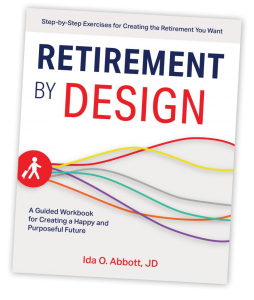
If you’re a lawyer considering retirement, my book, Retirement by Design is the place to start. This workbook helps you figure out what you want your life to look like after you leave practice, and how to make it happen. You can work through it on your own, with a spouse or friend, or in a small group. Many firms make the book available to their lawyers as a practical resource. Firms interested in bulk pricing are welcome to contact me.
National Legal Mentoring Conference
I hope you’ll join me at the National Legal Mentoring Consortium’s virtual conference on October 22, 2026, from noon to 5:00 p.m. ET. The conference features nationally recognized thought leaders, judges, and innovators across the profession who will explore how legal education, diversity initiatives, AI, coaching, and succession planning are reshaping mentoring today.
Check out the exceptional program and register now:https://legalmentoring.org/
If you’re thinking about retiring, or are already in the process, I can help. And if your firm wants to create or refine a process to support partner retirement and succession, I’d be glad to talk with you about it. Get in touch here.